Last Updated on March 13, 2026 by admin
When Macau’s Light Rapid Transit (LRT) system — known locally as the Skytrain — first opened in December 2019, it was a long-awaited moment for the city. Plans had been in the works for well over a decade. Today, the network has grown significantly and offers visitors a genuinely impressive way to get around, particularly if you’re staying in Taipa or exploring the Cotai Strip.
The system is modern, clean, and remarkably quiet — a refreshing contrast to the busy roads and packed taxis outside. If you haven’t tried it yet, it’s worth it.
The Network Today
The LRT has expanded considerably since it first opened. As of 2025, there are three operational lines:
Taipa Line — The backbone of the network, with 11 stations running from Barra on the southern tip of the Macau Peninsula, across the bridge and through Taipa, all the way to the Cotai Strip area and beyond to Pac On ferry terminal. The line was extended in 2023, adding further reach into the Cotai area. This is the most useful line for most visitors, with stops near the major casino resorts, the airport, and the ferry terminal.
Seac Pai Van Line — Opened in November 2024, this short extension adds two stations, extending the network’s reach into the residential Seac Pai Van area on Coloane Island.
Hengqin Line — Also opened in December 2024, this two-station branch connects into the Hengqin development zone, reflecting Macau’s growing ties with the adjacent mainland Chinese district.
Together, the three lines cover 15 stations — a far cry from the partial, under-construction network of just a few years ago.
The Views from the Cotai Strip
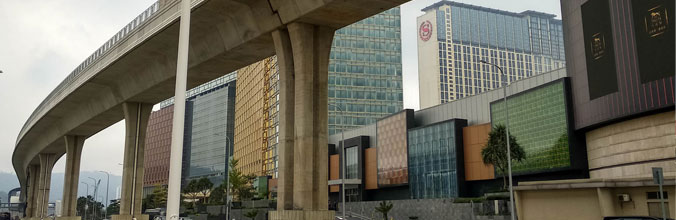
One of the unexpected highlights of riding the LRT is the elevated vantage point it gives you over the Cotai Strip. As the train glides between stations, you get sweeping views over the mega-resort skyline — the Venetian, Morpheus, Grand Lisboa Palace, and the rest — that you simply can’t get from street level. It’s a great way to appreciate just how dramatically Cotai has developed over the past two decades.
Even if you’re not travelling anywhere in particular, the ride through Cotai is worth doing for the views alone.
Practical Information
Fares
Fares are straightforward and affordable. The base fare is MOP 3 for up to 3 stations, with an additional MOP 1 charged for every 3 stations after that. For most journeys on the Taipa Line, you’ll pay MOP 3–6.
Payment — Macau Pass Card
The LRT does not accept cash. You’ll need to pay using a Macau Pass card — the city’s contactless stored-value smart card. If you’re planning to use public transport or visit multiple attractions during your trip, picking up a Macau Pass card is a good idea anyway. They’re available at the ferry terminal, airport, and many convenience stores.
Operating Hours
The LRT runs from 06:30 to 23:15 on weekdays. On weekends and public holidays, the service extends late into the night — trains run until 03:58, making it a useful option if you’re out late at the casinos or a show.
Frequency
Trains run frequently during peak hours, typically every 5–10 minutes. The system is fully automated and air-conditioned throughout — stations and trains alike are kept cool, which is a welcome feature during Macau’s hot and humid summers.
Key Stations for Visitors
Barra — The southern terminus, close to A-Ma Temple and the Maritime Museum. A good starting point if you’re coming from the ferry terminal at the Outer Harbour.
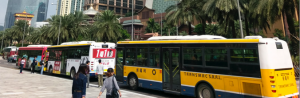
Cotai Strip stations — Multiple stops give direct access to the major resort-casinos, including the Venetian, Parisian, and their neighbours. Much easier than trying to navigate the free shuttle buses, especially during busy periods.
Taipa Ferry Terminal (Pac On) — Useful if you’re arriving or departing via the Cotai Ferry Terminal, which serves Hong Kong Skypier and other routes.
Airport — The LRT connects to Macau International Airport, making it a viable option for getting between the airport and Taipa or Cotai without relying on a taxi.
What’s Coming Next
The Macau government continues to expand the network. An East Line underground extension is planned, with an expected opening around 2029. This will eventually link the LRT to more parts of the Macau Peninsula, improving connectivity further. It’s a significant engineering challenge — much of the Peninsula’s infrastructure makes underground construction complex — but when complete, it will make the LRT dramatically more useful for visitors staying outside of Taipa and Cotai.
Is It Worth Using?
If you’re based in Taipa or Cotai, absolutely. The LRT is faster than a taxi stuck in Cotai traffic, far cheaper, and the experience of riding an elevated, fully automated train through one of Asia’s most surreal urban landscapes is genuinely enjoyable. For visitors whose itinerary keeps them mainly on the Macau Peninsula, the LRT is less central — though the Barra terminus and the planned East Line extension will eventually change that.
Either way, it’s worth hopping on at least once. The Cotai Strip views make it worthwhile on their own.